


Timber Gate Kits vs Bespoke Gates Compared
- Mark C
- Jul 13
- 6 min read
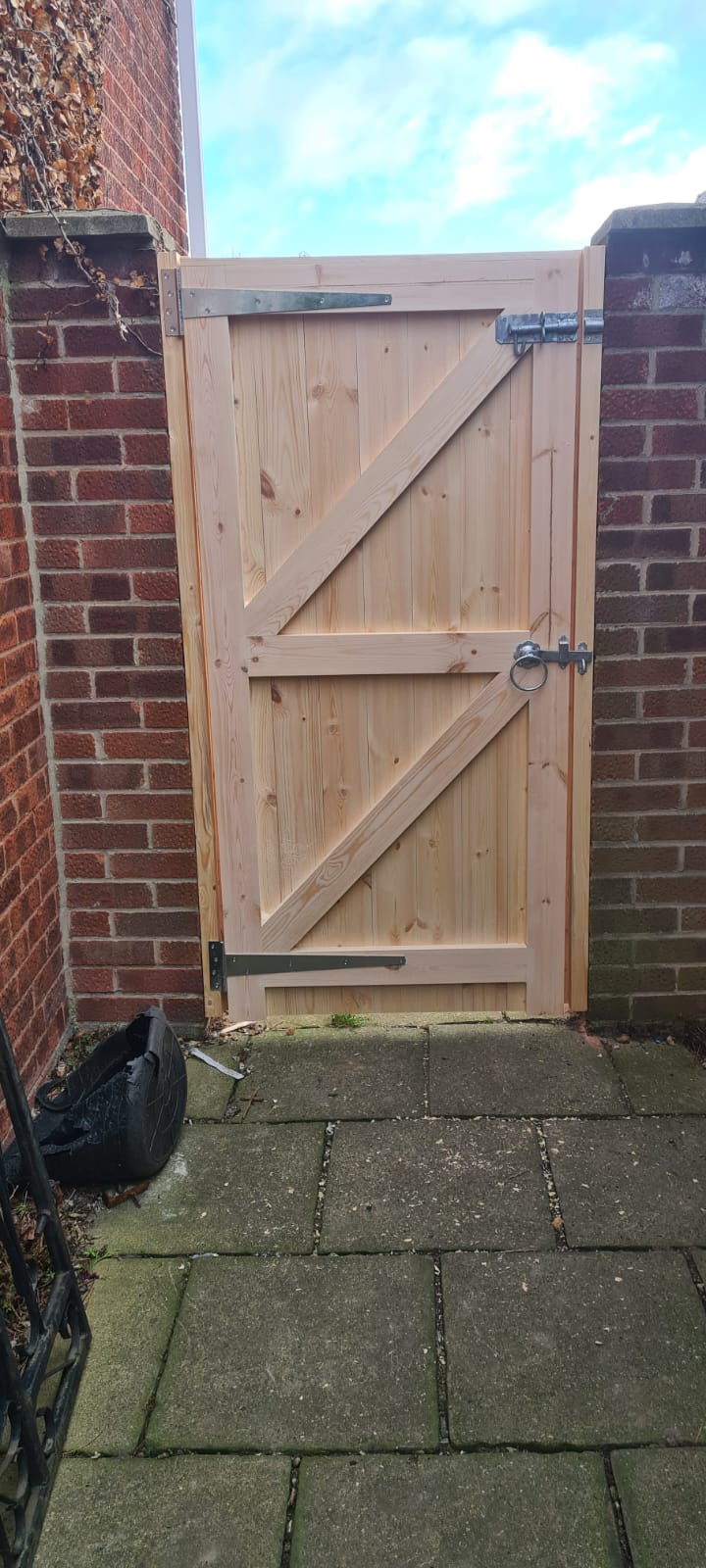
A gate that is only a few millimetres out can leave you with uneven gaps, awkward hinges and a finish that never looks quite right. That is why the choice between timber gate kits vs bespoke should start with your opening, not simply the ticket price. Both can be good options, but they suit different properties, budgets and levels of practical experience.
A timber gate is expected to work hard through wet winters, hot spells and daily use. Whether it is protecting a driveway, closing off a garden or adding privacy at the side of the house, the construction and fit matter just as much as the design.
What is included with a timber gate kit?
A timber gate kit is normally supplied as a standard-size gate or a set of components designed to make choosing and fitting simpler. Depending on the kit, this may include the gate itself, posts, hinges, a latch and fixings. It is a practical route for homeowners with a straightforward opening and a clear idea of the style they want.
The main benefit is convenience. Rather than sourcing timber, ironmongery and posts from different places, you can buy compatible essentials together. This can make planning easier, particularly for a garden gate where the opening is regular and the existing fence line is level.
Standard sizing also helps keep costs predictable. A manufacturer can make familiar dimensions efficiently, and customers can often choose from established designs without waiting for drawings or a made-to-measure build. For a replacement gate where the posts are sound and accurately spaced, a kit may be the sensible answer.
That said, the word ‘kit’ should not be confused with poor quality or a flat-pack compromise. The important question is how the gate itself has been made. Look for proper framed construction, strong joints and timber suited to exterior use, rather than lightweight boarded panels held together with basic screws.
Where gate kits can fall short
Most older properties are not built to standard dimensions. Brickwork moves, paths slope, posts lean and openings can be wider at the top than the bottom. A standard kit cannot correct these details on its own.
A gate that is too narrow can leave unattractive gaps, reducing privacy and making the installation look unfinished. One that is too wide may need trimming, which can alter the proportions of the design or expose untreated timber. If a driveway rises sharply behind the gate, you may also need a particular clearance beneath the bottom rail, or a gate designed to accommodate the slope.
Weight is another consideration. Larger driveway gates place real strain on posts and hinges. A kit can be suitable, but only when the posts are correctly sized, set deep enough and paired with ironmongery capable of carrying the load. Saving money on hinges or posts is often where a gate installation starts to fail.
Timber gate kits vs bespoke: the real difference
The difference is not simply standard versus expensive. Bespoke gates are made around the opening, the intended use and the look of the property. That means the width, height, rail layout, boarding, spacing and arch or flat top can be chosen to suit the job rather than adapted afterwards.
For many homeowners, bespoke work is most valuable where a gate needs to match existing fencing, side panels, brick pillars or another gate on the property. It is also the right choice when you need an unusual height for privacy, a narrow side passage gate, or a pair of driveway gates with a precise centre meeting point.
At M & D Woodcraft, made-to-order timber gates are built in-house rather than taken from a generic warehouse range. This allows the practical details to be considered before manufacturing, including finished sizes, hanging gaps and the direction the gate will open.
Bespoke does cost more than choosing an off-the-shelf size in some cases. It takes additional workshop time and planning. But the extra spend can be good value when it avoids site alterations, unnecessary trimming or the expense of replacing a gate that was never properly suited to the opening.
Construction matters more than a fashionable design
A handsome gate is not automatically a durable one. The construction beneath the surface decides how well it resists movement and everyday strain.
Traditional mortice and tenon joints are a strong choice for framed wooden gates because the rails and stiles are joined mechanically, not merely butted together. When combined with D4 exterior-grade glue and hardwood dowels, the frame is designed to remain secure through changing weather conditions. This is particularly important on wide gates, where the frame must support the boarding without sagging.
The timber itself also deserves close attention. Engineered timber construction offers improved stability over many ordinary pressure-treated softwood options. It is designed to reduce the natural twisting, splitting and movement that can occur as timber takes on and releases moisture. For homeowners who want a more stable gate without moving to the price of hardwood, it offers a useful middle ground.
Neither a kit nor a bespoke gate will perform well if it is poorly constructed. Equally, a well-made standard gate may outlast a badly made custom one. Compare like with like: jointing, timber preparation, framing thickness, glue, dowels and the quality of the ironmongery all belong in the decision.
Consider the full installation cost
It is easy to compare the price of the gate alone, then discover that posts, hinges, latch, fixings, treatment and fitting add considerably to the final figure. A kit can make this clearer because the main components may be selected at the same time. Bespoke buying can do the same when the quotation is based on the full requirement rather than a gate leaf in isolation.
For a driveway gate, allow for properly sized posts, suitable groundworks and hinges that match the gate weight. For a pedestrian gate, think about the closing action, access from both sides and whether a latch, ring handle, bolt or lock is needed. If the gate will be automated later, raise that at the outset, as the frame, hanging arrangement and clearances should support the intended system.
Finishing should also be planned. A primer and quality exterior oil or paint protect the timber and help maintain its appearance, but they are not a one-off job. Timber gates benefit from regular inspection and maintenance, especially on exposed sites. Keeping the finish in good condition, clearing soil and leaves from the base, and checking hinge fixings will extend service life.
When a kit is the better choice
Choose a timber gate kit when your opening is genuinely standard, level and measured accurately. It is a particularly good option for replacing a like-for-like garden gate, adding a simple side gate or completing a new fence run where the posts can be positioned to suit the gate.
It also works well for buyers who are comfortable fitting a gate themselves or already have a trusted installer. Provided the kit uses quality materials and proper joinery, it can give a neat, durable result without the additional cost of a fully made-to-measure design.
Before ordering, measure the opening in at least three places and use the smallest measurement. Check the ground level, identify where the hinges will be fixed and leave suitable clearance for the gate to swing freely. A quick sketch with dimensions can prevent an expensive mistake.
When bespoke is worth paying for
Bespoke gates are usually the better investment when the opening is unusual, the ground is uneven or the appearance needs to be exact. They are also worth considering for wide driveway entrances, matching pairs of gates and properties where the entrance is a prominent part of the frontage.
The benefit is not only a closer fit. You can choose proportions that look right for the space. A gate that is made too tall, too narrow or too heavily boarded can overpower a small garden. A well-proportioned custom gate can add privacy and security while still sitting naturally alongside the house, fencing and landscaping.
For families fitting a stair gate or a gate in a confined access area, accurate sizing can be equally important. Safety products should not rely on makeshift packing pieces or large gaps that reduce their purpose.
Make the decision from the opening outwards
Start with a tape measure, not a brochure. Assess the width and height, the state of the posts or pillars, the direction of travel and the slope of the ground. Then decide whether a standard gate will genuinely fit without compromise.
If it will, a quality timber gate kit can be an efficient, cost-conscious purchase. If the opening or design has complications, bespoke manufacture gives you control where it counts. A gate made with sound joinery, stable timber and suitable ironmongery will always be more satisfying than one chosen simply because it was the closest size available.
Take clear measurements, photograph the site and think about how the gate will be used every day. Those few practical checks will point you towards a gate that looks right on day one and continues to do its job properly for years to come.


Comments