


How to Measure a Wooden Gate Properly
- Mark C
- Jun 18
- 6 min read
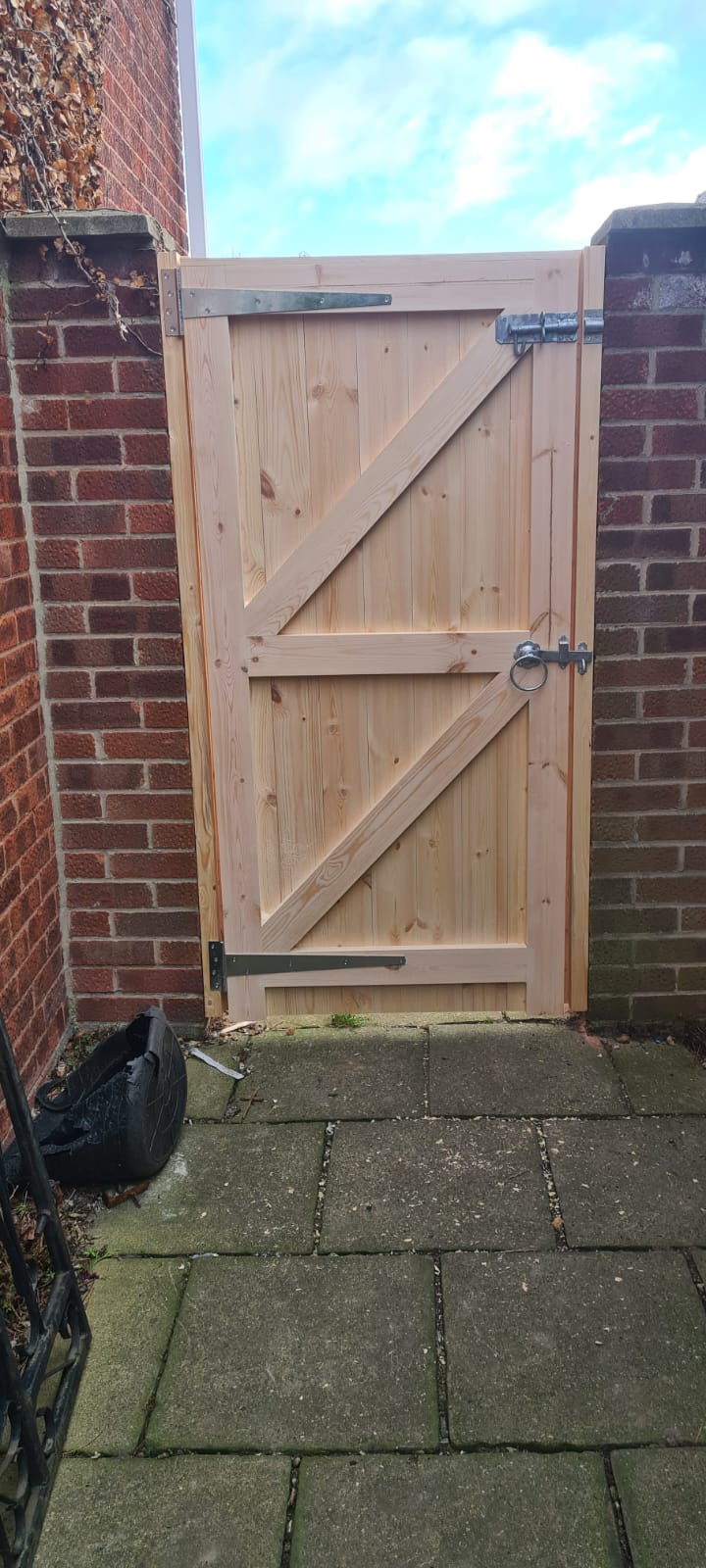
A gate can be beautifully made, strongly jointed and built from quality timber, but if the opening has been measured badly, none of that helps. Most problems with fitting start before the gate is even made. If you are wondering how to measure a wooden gate, the job is not difficult, but it does need a careful approach and a tape measure used properly.
The aim is simple. You need the finished gate size to suit the opening, allow for the correct hardware, and work with the ground levels on site. That matters whether you are ordering a side gate, a pair of driveway gates or a garden gate between posts. A made-to-measure gate should fit the space it is built for, not leave you trimming, packing, or trying to make up for guesswork on installation day.
How to measure a wooden gate before you order
Start by deciding exactly where the gate will hang. That sounds obvious, but many openings are not as square or consistent as they first appear. Timber posts may have moved slightly over time, brick piers can vary, and paths or driveways often rise or fall more than expected.
Use a steel tape measure rather than a cloth tape, and take all sizes in millimetres. For most gate openings, it is best to measure the width in three places - at the top, middle and bottom. If those figures differ, use the smallest width as your reference point. That gives you the true limiting size of the opening rather than the most generous one.
Next, measure the height from the ground up to the point you want the gate to reach. Again, take this in more than one place, especially if the ground slopes. On a level opening this is straightforward. On uneven ground, the hinge side and closing side may give you different readings, which affects the gate style and the clearance underneath.
At this stage, do not just measure the space and assume the gate should be the same size. A gate needs allowances for hinges, latch gaps and ground clearance. The exact amount depends on the type of gate and the ironmongery being used.
Measuring the width of a gate opening
For a single gate, measure the clear opening between the inside faces of the posts or pillars. This is the true space available for the gate and its fittings. If there are no posts yet, and you are planning to fit them later, you need to account for post width separately before deciding on gate size.
A common mistake is measuring from outside edge to outside edge, which tells you very little about the actual hanging space. Always measure where the gate will sit.
For a pair of gates, the principle is the same. Measure the full clear opening between the posts, then allow for the meeting gap in the centre as well as the hinge side clearances. A pair of gates does not usually fill the opening tightly from post to post. There needs to be room for proper movement and for the hardware to work as intended.
The allowance varies with hinge choice and fitting method. Hook and band hinges, adjustable hinges and heavy-duty driveway fittings all need slightly different spacing. That is why it helps to know early on what hardware you will be using, rather than leaving it as an afterthought.
How to measure a wooden gate for height
Height is not only about appearance. It affects privacy, security, ease of use and whether the gate will clear the ground through its full swing.
Measure from the finished ground level, not from loose gravel, turf that may be cut lower later, or uneven soil that will be altered during the job. If the surface beneath the gate is changing - for example, if you plan to lay paving after the gate is installed - you need to work to the final finished level, not what is there today.
Ground clearance is the key allowance here. A gate normally needs a gap at the bottom so it can open freely and avoid taking up moisture from standing water or debris. The size of that gap depends on the surface. A gate over paving or concrete can usually have a tighter clearance than one above gravel or uneven ground.
If the drive or path slopes upward in the direction the gate opens, more clearance may be needed at the lowest swinging point. In some cases, a standard square-bottomed gate may not be the best answer, and a gate made to suit a fall or a rising curve becomes the sensible option.
Check whether your posts and pillars are suitable
The opening size is only part of the story. The gate is only as good as what it is fixed to. Before ordering, check that the posts, brick piers or wall surfaces are sound, plumb and suitable for the weight of the gate.
Timber posts should be upright and firmly set. Older posts can look acceptable at a glance but still have movement at the base or twist through their length. Brick piers should be solid and not leaning. If the support structure is out of line, the measurements may be correct on paper, but the fitted result can still be troublesome.
It is worth measuring diagonally across the opening as well. If one diagonal is longer than the other, the opening is out of square. That does not always prevent a good installation, but it is useful information when ordering a bespoke gate.
Single gates and pairs need slightly different thinking
A single pedestrian gate is usually the simplest to measure. You are looking for the clear width, intended height, hardware allowance and bottom clearance. The latch side needs enough room to close cleanly without binding on the post.
A pair of driveway gates adds another layer. You need to think about the centre meeting point, whether the ground is level across the full span, and whether both leaves will be equal in size. Most pairs are split evenly, but not always. Sometimes one leaf is made wider if regular access is mainly through one side, or if site conditions make an equal split less practical.
If automation is planned now or later, mention that at the measuring stage. The gate size, weight, hinge position and bottom clearance can all be affected by the requirements of automation equipment.
Common measuring mistakes to avoid
The biggest mistake is measuring once and calling it done. Openings rarely behave that neatly. Check every key dimension at least twice.
Another common error is forgetting fittings. A gate is not just a timber panel in a hole. Hinges, latches, drop bolts and stops all influence the space needed. Ordering the exact opening width as the gate width can leave no room for proper installation.
People also often measure from awkward reference points. Rendered walls, uneven post faces and decorative caps can throw the figures off if they are not part of the true fixing line. Measure from the actual structural faces where the gate hardware will sit.
Finally, do not ignore the ground. A gate that fits nicely at the top can still catch on a rising drive, drag on gravel, or leave an untidy gap where the fall was not considered properly.
What to have ready when requesting a made-to-measure gate
When you ask for a quote or place an order, clear information saves time and avoids mistakes. The useful details are the opening width, the preferred gate height, whether it is a single gate or pair, what the gate is hanging from, and whether the ground is level or sloping. A few photographs of the opening can also help if there is anything unusual on site.
If you already know your preferred fittings, include that too. The more accurate the picture of the opening, the easier it is to produce a gate that suits it properly. At M & D Woodcraft Ltd, that matters because a bespoke gate is built to the measurements given, with the joinery and construction set up for the job it is meant to do.
When it depends on site conditions
There is no single allowance that suits every opening. A narrow side gate between timber posts, a heavy driveway gate hung from substantial posts, and a garden gate on sloping ground all need slightly different treatment. That is where straightforward measuring meets practical judgement.
If you are ever unsure, it is better to ask before ordering than try to make the site fit the gate afterwards. Timber gates are handmade items, and when built well they are meant to last. Getting the measurements right at the start gives you a gate that hangs properly, closes cleanly and looks as though it belongs there.
A careful measure is not the glamorous part of the job, but it is the part that gives every well-made wooden gate the chance to do its work properly for years.


Comments