


Choosing a Wooden Side Entrance Gate That Lasts
- Mark C
- 3 hours ago
- 6 min read
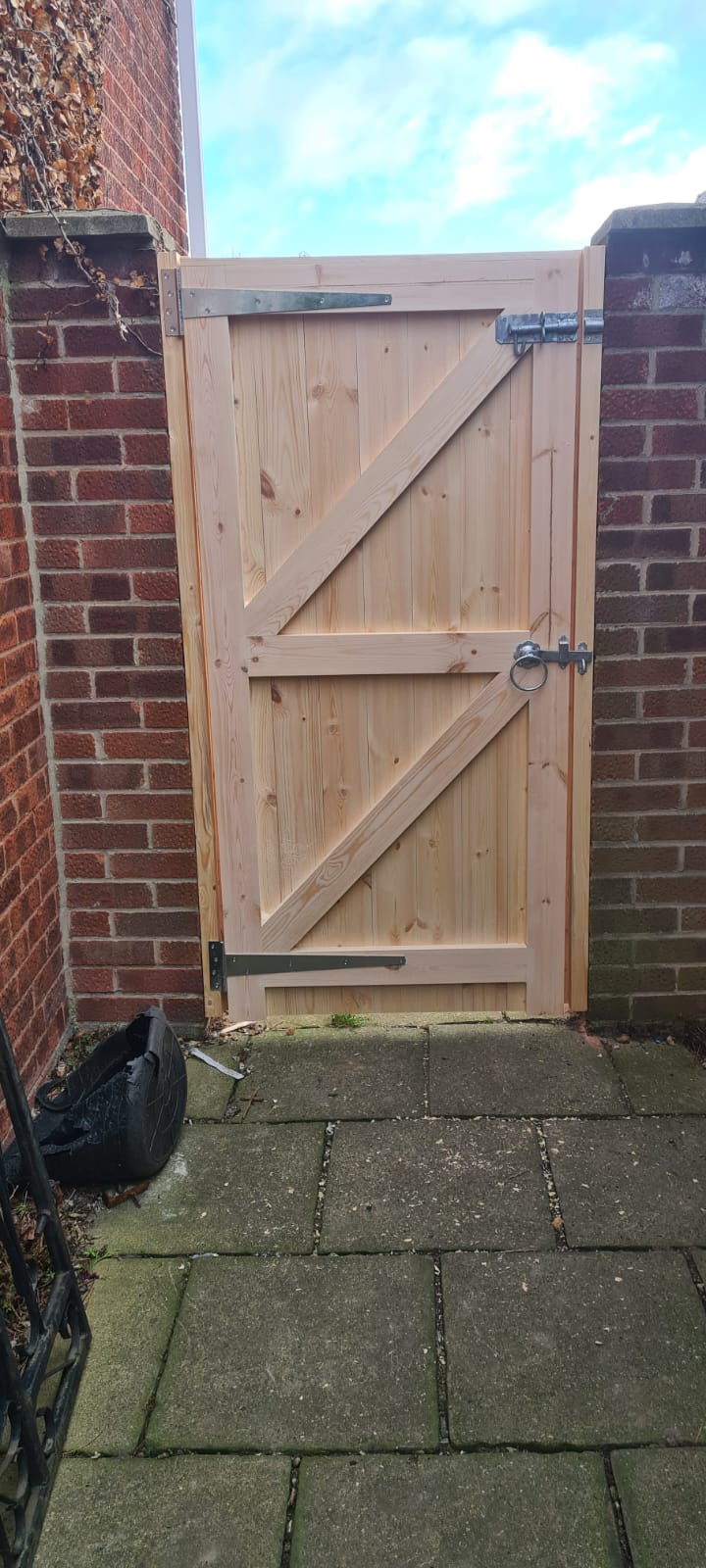
A side entrance is often the hardest-working route around a property. It may be used for bins, bikes, garden equipment, children coming home from school, or simply keeping a dog safely in the garden. A wooden side entrance gate needs to do more than look smart from the pavement. It must fit properly, close cleanly and stand up to regular use through British weather.
The right gate brings privacy and security without making access awkward. The wrong one can sag, twist, drag on the ground or leave a gap where you most need a solid boundary. That is why it pays to consider construction and fitting just as carefully as the style.
Start with the job your gate needs to do
Before choosing a design, think about how the entrance is used day to day. A narrow passage beside a terraced house has different needs from a wide side access leading to a rear garden. If the gate opens onto a public path, a lockable latch may be a priority. If it leads to a family garden, you may want a taller, close-boarded design for privacy and a secure boundary for children or pets.
A solid boarded gate gives the greatest screening and can make a side passage feel more enclosed. This is useful where neighbouring windows overlook the access. A framed gate with spaced boards allows more light and airflow, but offers less privacy. Neither is automatically better - the best choice depends on the position, the level of exposure and the character of the property.
Also consider the direction of opening. In most cases, the gate should open inwards onto your own land, rather than across a path or shared access. Check that there is room for the full swing, particularly where bins, meters or steps sit close to the opening.
Why construction matters in a wooden side entrance gate
A garden gate spends its life outside, coping with rain, frost, heat and changes in moisture. Timber naturally expands and contracts as the seasons change. Good construction does not stop timber being timber, but it helps the gate cope with that movement without losing its shape.
A properly made gate should have a substantial outer frame rather than relying on thin boards fixed to a light backing. Mortice and tenon joints are a traditional and proven way of joining the rails and stiles. When combined with exterior-grade D4 glue and hardwood dowels, they create a strong frame designed for the repeated stresses of opening, closing and hanging.
This is where handmade gates differ from many off-the-shelf alternatives. A lower-priced gate may look acceptable when first fitted, but lightweight framing, staple-fixed bracing or basic butt joints can soon show their limits. The gate may drop at the latch side, boards can work loose, and the opening becomes difficult to use.
Engineered timber is a sensible option for homeowners who want dependable performance without the cost of hardwood. By laminating carefully selected timber sections, movement is better controlled than with a single, wider piece of pressure-treated softwood. It offers a strong balance of stability, appearance and value, provided the gate is made with sound joinery and properly protected after fitting.
Measure the opening, not the old gate
Replacing an existing gate does not mean the new one should be exactly the same size. The old gate may have swollen, warped or been trimmed over time. Always measure the clear opening between the finished faces of the posts or walls at the top, middle and bottom. Use the smallest measurement as your starting point.
Allow for the hinges, latch gap and a sensible clearance beneath the gate. That bottom clearance matters more than people expect. A gate that looks neatly fitted in summer can catch on gravel, paving or a slightly raised path once timber moves or debris collects below it.
For an uneven opening, made-to-measure work is particularly worthwhile. A bespoke gate can be built to suit the available space, while the posts can be positioned or packed correctly to provide an even reveal. It is a far better answer than forcing a standard-size gate into an awkward gap and hoping the ironmongery will compensate.
Do not overlook the posts
Even the best gate will perform poorly on weak or moving posts. Timber posts need to be sufficiently substantial for the gate’s weight and set securely. Masonry or brickwork can also be used, but fixings must be suitable for the condition of the wall, not just the surface finish.
If the existing posts are leaning, split, rotten at ground level or loose in their footings, replace or repair them before fitting the new gate. Trying to correct failing posts by adjusting hinges only creates a short-term fix.
Choose ironmongery to suit the weight and use
Hinges, latches and bolts are working parts, not decoration. They need to match the gate’s size, weight and the way it will be used. For most side gates, adjustable hook and band hinges are a practical choice because they spread the load across the gate frame and allow fine adjustment after fitting.
A good latch should be easy to operate from the side that needs regular access. Where security is required, add a suitable lock or lockable long-throw latch, and consider a bolt on the inside for times when the gate will not be used. If the entrance is exposed to the road, fittings that can be opened from outside need particular thought.
Galvanised or powder-coated ironmongery is well suited to outdoor use. Black fittings remain a popular choice on traditional timber gates, while galvanised finishes offer a more utilitarian look. The choice is largely visual, but corrosion resistance should come before appearance.
Avoid fitting a heavy gate on undersized hinges or using a decorative latch as the only means of security. These are common shortcuts, and they usually become apparent after the first winter.
Height, privacy and planning considerations
A taller gate can make a side entrance feel private and secure, but do not choose height in isolation. Consider the fence line, neighbouring property, sightlines and whether the gate sits next to a highway. Rules can vary depending on where the boundary is located and whether any permitted development rights have been restricted locally.
For many domestic side entrances, a gate that aligns neatly with the adjoining fencing gives the best result. It looks intentional, reduces obvious gaps and keeps the boundary consistent. If privacy is the main concern, a close-boarded or tongue-and-groove style with a framed and ledged construction is usually more effective than trying to add screening later.
Where wind funnels through the side of a house, a fully solid tall gate will take more pressure than an open design. Strong posts and suitable hinges become especially important. In very exposed spots, it may be worth choosing a slightly more open style or ensuring the gate is not wider than necessary.
Finish and maintenance are part of the purchase
No external timber gate is entirely maintenance-free. The difference lies in choosing a good base material and applying a suitable finish before weather has a chance to get into the timber. Primer, paint, stain or oil should be selected for exterior joinery and applied exactly as the product instructions require.
Pay close attention to the end grain, the top and bottom rails, joints and any cut edges made during installation. These areas can absorb moisture more readily. A finish that is missed in a hidden place is still a weak point.
Paint gives a more uniform colour and can suit period properties, but it will eventually need preparation and recoating as it ages. Oils and stains tend to retain more of the timber character and are often simpler to refresh, though they may need more frequent attention. The right finish depends on the appearance you want and how much upkeep you are prepared to carry out.
Check the gate each spring and autumn. Clear soil and leaves from beneath it, tighten loose fixings, lubricate moving ironmongery and look for damage to the coating. A small repair made early is usually straightforward. Leaving bare timber exposed through a wet winter can turn a minor job into a larger one.
A gate should be made for the opening
A well-chosen side gate is a practical part of the home, but it also sets the standard for the whole boundary. It should feel solid in the hand, hang squarely and suit the property rather than looking like a compromise forced into place.
For unusual widths, sloping ground or a particular requirement for privacy, a made-to-order gate gives you control over the details that affect daily use. M & D Woodcraft builds handmade gates with engineered timber, traditional mortice and tenon joinery and practical options for posts, ironmongery and finishes. Get the measurements right, choose construction that earns its keep, and your side entrance can remain secure and presentable for years to come.


Comments