


Are Wooden Driveway Gates Secure? What Matters
- Mark C
- 2 days ago
- 6 min read
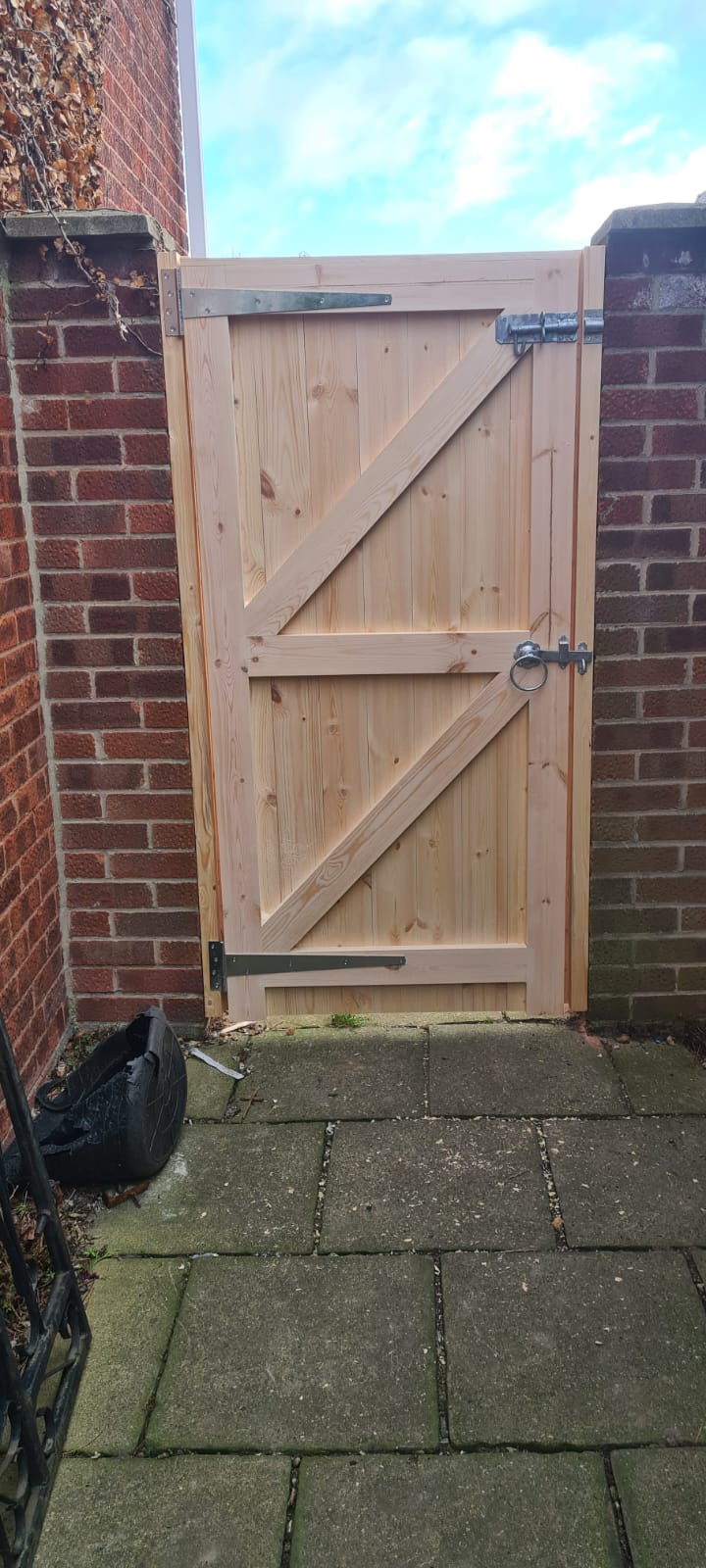
A driveway gate is often the first physical boundary between your home and the street. It needs to look right on the property, but it also needs to be difficult to force, lift, climb around or simply push open. So, are wooden driveway gates secure? They can be very secure, provided the gate, posts, hinges, locking method and installation are specified as one system.
Timber is not inherently a weak choice. A well-made wooden gate has real weight, a solid frame and a substantial presence at the entrance to a property. The weak points are usually not the timber panels themselves. They are poor-quality joinery, undersized posts, light-duty hinges, inadequate foundations or a lock that does not properly secure the two leaves together.
Are wooden driveway gates secure enough for a home?
For most residential driveways, a properly built and fitted wooden gate is an effective security measure. It creates a clear boundary, restricts casual access and makes a property feel less open to opportunistic visitors. A closed gate also gives privacy, which can prevent tools, vehicles and side access routes from being on display.
That said, no domestic gate should be treated as an impenetrable barrier. A determined intruder with time, tools and privacy may defeat many types of gate, whether they are timber, metal or composite. The practical aim is to make unauthorised entry difficult, noisy and time-consuming, while pairing the gate with sensible lighting, good locks and, where wanted, other home security measures.
The level of security needed depends on the setting. A gate at the front of a busy village property has different demands from one protecting a long rural driveway, a valuable vehicle or a side entrance with limited visibility. Height, sightlines and access from neighbouring land all affect the right design.
Security starts with the timber and frame
A driveway gate must resist more than attempted entry. It is exposed to wind, rain, seasonal movement and the repeated strain of opening and closing. If a gate twists, drops or opens up at the joints, its lock alignment suffers and security soon follows.
Look beyond the face of the gate and ask how it is made. A framed, ledged and braced gate can be suitable for lighter openings, but a heavier driveway gate benefits from a properly engineered frame. Mortice and tenon joints, exterior-grade D4 adhesive and hardwood dowels give the frame far better long-term integrity than a construction based mainly on screws or staples.
At M & D Woodcraft, gates are handmade using engineered timber construction. This is designed to offer greater stability than ordinary pressure-treated timber, while avoiding the cost of hardwood. The construction matters because a gate that stays square is easier to lock, less likely to catch on the ground and more dependable through changing British weather.
Board thickness and gate design also deserve attention. Open-bar designs can provide a welcoming appearance and retain views, but they offer less privacy and may be easier to reach through. Closeboard, tongue-and-groove or solid-panel driveway gates provide a more enclosed boundary. They can be a better choice where privacy is part of the security requirement, although solid gates catch more wind and need suitably strong posts and fittings.
Height and gaps make a difference
A taller gate is generally harder to climb, but it must still suit the property, local planning considerations and the practical limits of the opening. Gates beside a highway may have restrictions on height, particularly when positioned close to the carriageway. Check this before ordering rather than assuming a taller gate is always permitted.
Keep the clearance beneath the gate sensible. A gap is needed to avoid the gate dragging on uneven ground, leaves and gravel, but a large gap can reduce privacy and make it easier for animals or children to pass beneath. The gap between a pair of gates should likewise be close enough to prevent unnecessary movement, while allowing for normal timber movement and reliable latching.
Posts and foundations are the real backbone
A strong gate fixed to weak posts is not a secure installation. The posts carry the weight of the gates, take the force of wind and resist any attempt to push, pull or lever the leaves. They should be correctly sized for the gate width and weight, set plumb and installed in sound foundations.
For driveway gates, the post section and depth in the ground should be chosen with the actual gate design in mind. Wide, solid double gates are much heavier than a small open-style pair. Ground conditions matter too. Soft, disturbed or waterlogged ground may require a more considered foundation than firm, well-drained soil.
The gate should not be allowed to hang from fence posts that were never intended for the job. Nor should it be fixed to a decorative brick pier without checking that the pier and its foundations can withstand the loading. Movement at the support point can loosen fixings, misalign locks and create a gap that invites levering.
Hinges and fixings must resist lifting
Hinges are a common point of failure on inferior gate installations. A pair of heavy gates needs hinges rated for the gate weight, width and opening pattern. Adjustable hook and band hinges are a traditional, practical option for timber gates because they spread the load and allow the gate to be re-aligned as it beds in.
For better security, consider hinge arrangements that make removal difficult when the gate is closed. Depending on the layout, this may include safety bolts, security collars or hinge designs that prevent a leaf being lifted from its hook. The fittings must be matched to the gate and posts, not selected merely because they look suitable.
Use substantial exterior-rated fixings throughout. Ordinary screws can corrode, loosen and leave a gate vulnerable over time. Galvanised or stainless steel fittings are generally the sensible choice outdoors, with the final selection depending on the finish, location and ironmongery used.
Secure the meeting point on double gates
With double driveway gates, the centre meeting point needs particular thought. A simple latch may hold the leaves shut in normal use, but it is rarely the best answer for security. One leaf should be held firmly in position with a drop bolt or similar device, ideally locating into a properly formed socket in the ground. The active leaf can then close against it and be locked securely.
A lockable long-throw gate lock, locking latch or suitable padlock arrangement can work well, provided it is protected from weather and fitted at a practical height. The aim is to prevent the leaves being pushed apart, not simply to stop them swinging in the wind. Where the gate is automated, the motor and locking arrangement should be selected and installed by a competent specialist, with safety devices included as part of the system.
Good fitting matters as much as good gates
Even the best-made gate can become frustrating and insecure if fitted without care. Gates should be hung level, set with appropriate clearances and checked through their full swing. The latch or lock should engage cleanly without needing to lift, force or pull the gate into place.
A gate that starts to drag should be adjusted promptly. Leaving it to scrape along the driveway places strain on hinges and encourages people to stop using the lock properly. Seasonal checking is worthwhile: inspect hinge bolts, tighten fittings where needed, clear the drop-bolt socket and look for signs that posts are moving.
Timber maintenance supports security too. Keep the protective finish in good condition, particularly on end grain and areas around fittings. Water getting into neglected joints and fixing holes can shorten the serviceable life of a gate. A maintained wooden gate is not only better looking - it is more likely to remain straight, sound and properly aligned with its locking hardware.
Choosing the right level of security
For a typical family home, a made-to-measure wooden driveway gate with sound posts, quality adjustable hinges and a proper lock will provide a strong, attractive first line of defence. If the property is more exposed, consider a more private design, taller gates where permitted, anti-lift hinge measures, lighting and a lock arrangement that cannot be reached easily from outside.
Avoid treating security as an add-on at the end of the order. Decide early how the gates will be used, who needs access, whether they will be manual or automated, and what they need to protect. A gate designed around those answers will feel right every day, not just on the day it is installed.
A well-built wooden driveway gate is a practical investment in privacy, kerb appeal and peace of mind. Choose proper joinery, substantial supports and fitting that respects the weight of the gates, and it will do far more than mark the edge of your driveway.


Comments