


Why Mortice and Tenon Gate Construction Lasts
- Mark C
- Jun 17
- 6 min read
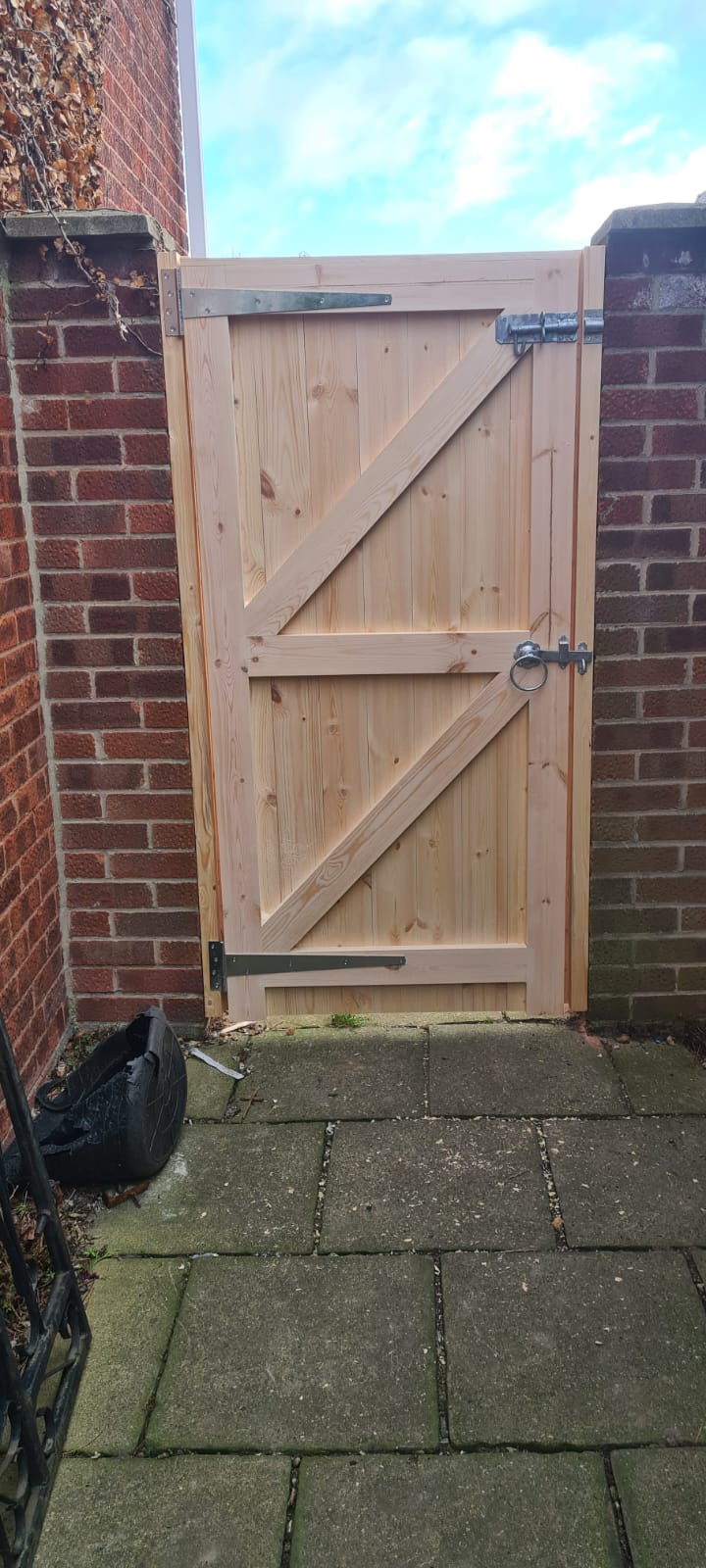
A wooden gate usually tells you what it is within a few seasons. If it begins to drop, twist or open out at the joints, the problem is rarely just weather. More often, it comes back to how it was made in the first place. That is why mortice and tenon gate construction still matters so much for homeowners who want a gate to look right, hang properly and stay dependable year after year.
For many buyers, all timber gates can look similar on a screen. The difference only becomes clear once the gate is on the posts, carrying its own weight through wet winters, warm spells and daily use. Good joinery is what keeps the frame working as one piece instead of a collection of boards under strain.
What mortice and tenon gate construction actually means
At its simplest, a mortice and tenon joint connects one section of timber to another by forming a shaped tongue on the end of one component and fitting it into a matching slot in the next. In gate making, this is commonly used where the rails meet the stiles, creating the main frame of the gate.
That sounds straightforward, but it is one of the strongest traditional joints available for this type of work. Instead of relying on screws, nails or metal brackets to hold the structure together, the joint itself becomes part of the gate's strength. When it is accurately cut, glued with an exterior-grade adhesive and reinforced correctly, it gives the frame far better resistance to movement.
For an external gate, that matters. A gate is not a decorative panel fixed to a wall. It is a moving part exposed to rain, frost, sun and repeated opening and closing. The joinery needs to cope with weight, leverage and seasonal timber movement without working loose.
Why this joint matters more on gates than on many other timber products
A gate lives a harder life than most garden timber. It hangs from one side, carries weight across its width and deals with constant pressure at the latch end. Every time it opens, closes or catches the wind, stress moves through the frame.
With weaker construction, that stress tends to show up in familiar ways. Corners begin to loosen, the gate drops on its hinges, diagonal bracing stops doing its job properly and the whole gate can start to rack out of square. Once that happens, adjustment only gets you so far. If the frame itself has started to fail, hardware changes will not put strength back into the timber.
Mortice and tenon gate construction helps prevent that by locking the main frame members together in a much more meaningful way. It gives the gate a solid structural skeleton. The cladding, pales or infill boards may define the style, but the frame is what carries the load.
The difference between proper joinery and basic assembled gates
There is a real difference between a handmade framed gate and a gate that has simply been fastened together quickly from standard sections. On lower-grade gates, you may find butt joints, screws driven into end grain or a design that depends too heavily on the face boards to keep everything rigid.
That can keep costs down at the start, but there is usually a trade-off. Simpler assembly methods can be more vulnerable to movement, especially outdoors where timber expands and contracts with changes in moisture. Once fixings begin to loosen or the frame starts shifting, the gate often loses its clean line and smooth fit.
A properly made mortice and tenon joint is more labour-intensive, which is one reason it remains a mark of quality. It takes time to machine accurately, fit correctly and assemble with care. But that extra work is there for a reason. It supports the long-term performance of the gate rather than just its appearance on delivery day.
Why material quality still matters alongside the joinery
Strong joints alone cannot rescue poor timber. The best results come when sound joinery is paired with stable, suitable material. For external gates, that means timber that has been selected and prepared with outdoor performance in mind.
This is where engineered timber construction has a clear advantage over many basic softwood options. By improving stability in the timber itself, you reduce the chance of excessive twisting, splitting and movement across the finished gate. When that stability is combined with mortice and tenon joints, the whole structure has a much better chance of holding its shape.
That balance appeals to many homeowners because it offers a practical middle ground. Hardwood has its place, but it is not the only route to a durable gate. Well-made engineered timber gates can provide excellent strength and stability while remaining far more cost-effective.
Mortice and tenon gate construction and glue performance
Joinery is not only about the cut of the timber. Adhesive choice matters as well. External gates need a glue that is suited to outdoor conditions, not a general-purpose product meant for dry interiors.
A D4 exterior-grade glue is commonly used where long-term moisture resistance is required. In gate construction, this adds another layer of security to the joint, helping the mortice and tenon connection resist weather exposure and everyday strain. When used properly, it strengthens the assembly rather than leaving the joint dependent on mechanical fixing alone.
Some manufacturers also reinforce joints with hardwood dowels, which can add further strength and help keep the joint firmly locked. It is a good example of why looking beyond the headline product photo is worthwhile. Two gates may look much the same in style, but the construction details underneath can be very different.
Where homeowners see the benefit in day-to-day use
The value of good joinery is not just technical. You notice it in the way a gate behaves. A well-constructed gate tends to feel more solid in use. It hangs more confidently, closes more cleanly and is less likely to work itself out of alignment early in its life.
That is especially important on wider driveway gates and heavier pedestrian gates, where the forces involved are greater. The larger the gate, the less forgiving weak construction becomes. On made-to-measure work, accurate sizing and strong frame assembly go hand in hand. There is little point ordering a bespoke size if the build quality does not support it.
For families, there is also a practical reassurance in knowing the gate is built to cope with regular use. Whether the priority is privacy, security, child safety or simply improving the front of the property, the gate needs to do its job consistently rather than becoming another maintenance problem.
What to ask before buying a wooden gate
If you are comparing gates, it is worth asking a few direct questions about construction. How are the frame joints made? Is the timber engineered or standard pressure-treated softwood? Is an exterior-grade adhesive used? Are joints dowelled or otherwise reinforced? Those details tell you far more than a polished product description ever will.
It is also sensible to ask whether the gate is made to order or produced in fixed standard sizes only. A bespoke manufacturer is usually better placed to match the gate properly to the opening and to maintain control over the build quality throughout production. That matters because even strong joinery performs best when the gate is correctly proportioned for its intended use.
At M & D Woodcraft Ltd, this traditional method of construction remains central because it answers the question most homeowners are really asking: will this gate last and will it stay looking right? Style matters, of course, but the frame behind it is what decides whether the gate keeps doing its job.
Is mortice and tenon gate construction always the right choice?
For quality timber gates, it is very often the right choice, but context still matters. A light decorative gate in a sheltered position does not face the same demands as a large driveway gate exposed to wind and heavy daily use. Budget plays a part as well. Better joinery usually costs more than the most basic alternatives because it takes more time and skill to produce.
Even so, many homeowners find the value is better over the life of the gate rather than at the first point of purchase. Replacing a cheaper gate early, adjusting it repeatedly or dealing with sagging and joint failure can soon cancel out any initial saving.
When you are choosing a gate, the best question is not simply what it looks like today. It is how the frame is built to cope with British weather, regular use and the weight it will carry over time. Get that part right, and the gate stands a much better chance of earning its place on the property for years to come.


Comments