


Aluminium Gate Alternatives for UK Homes
- Mark C
- 3 days ago
- 6 min read
A gate can change the whole feel of a property before anyone reaches the front door. Aluminium is often chosen for its clean lines and low-maintenance appeal, but many homeowners looking at aluminium gate alternatives find that another material better suits their property, budget or required size.
The right answer depends on where the gate will sit, how it will be used and the character you want to keep. A wide driveway entrance, a side garden gate and a pedestrian gate all place different demands on the frame, hinges, posts and finish. It is worth looking beyond the headline price and considering how the gate will look, operate and weather over the years.
Why look beyond an aluminium gate?
Aluminium gates are lightweight, will not rust in the way untreated steel can, and are commonly supplied with a powder-coated finish. For a modern property with a simple, horizontal design, they can be a sensible choice. Their limitations tend to become clearer when a homeowner needs a non-standard size, a warmer traditional appearance or a gate that matches existing timber fencing, cladding and landscaping.
Aluminium can also look out of place on period homes, cottages and properties with brick, stone or timber features. A coating may eventually chip or mark, particularly around busy latches and contact points. Repairs can be less straightforward than a local touch-up to a painted timber gate. Bespoke aluminium is available, but it can carry a substantial price once custom fabrication, powder coating, automation preparation and delivery are included.
For many UK homes, the best alternatives are engineered timber, hardwood, steel or composite. Each has a place, but they are not equal in every setting.
Engineered timber gates: a practical aluminium gate alternative
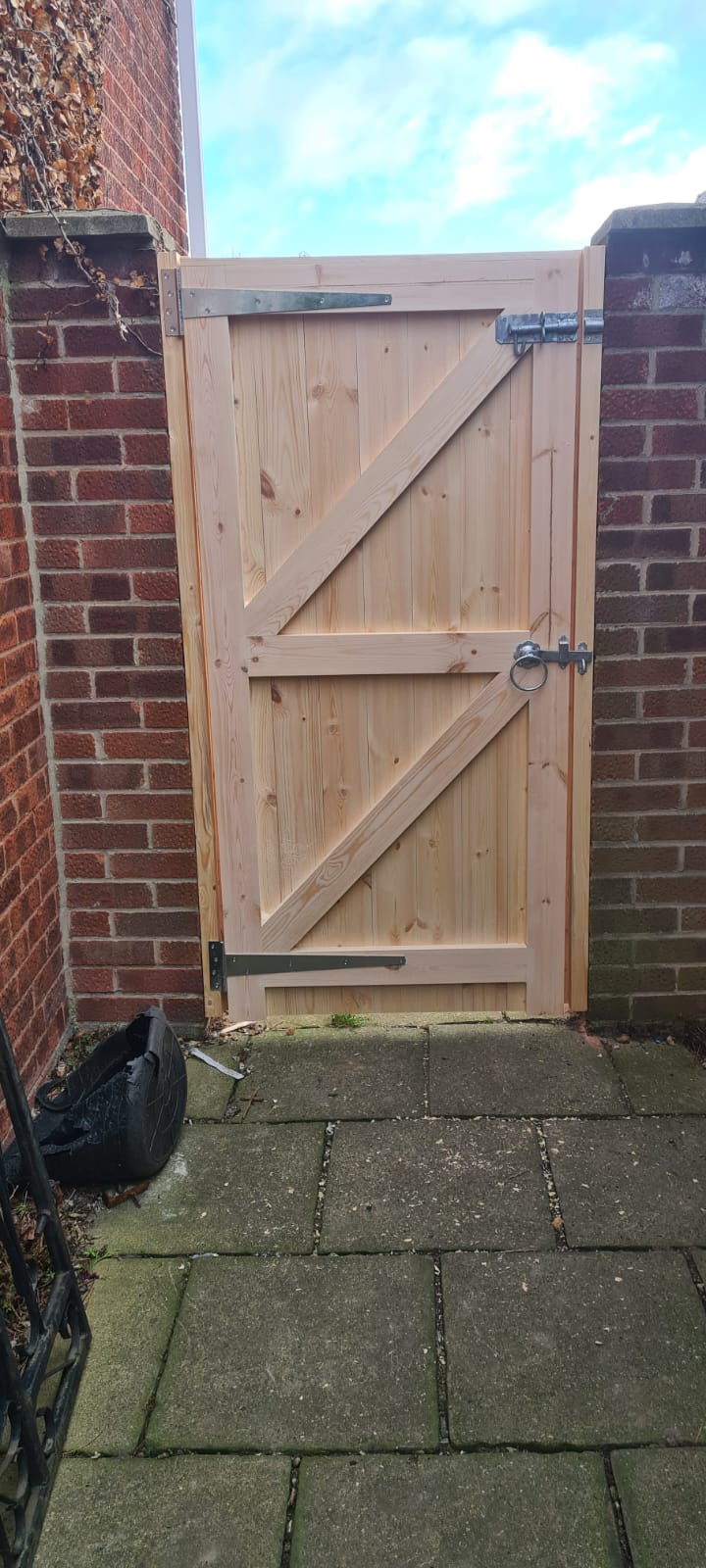
For homeowners who want real character as well as dependable construction, an engineered timber gate is often the strongest alternative to aluminium. Timber belongs naturally alongside brickwork, stone walls, country gardens and traditional homes. It can be made in styles ranging from closeboard and arched-top garden gates to substantial framed driveway gates, without looking overly manufactured.
The key point is the construction. A well-made wooden gate should not be confused with a lightweight pressure-treated softwood panel. Gates are exposed to changing moisture, sun, frost and wind, so the timber and joinery need to work together. Engineered timber is built to improve stability by reducing the tendency for wider sections to twist or move as conditions change.
At M & D Woodcraft, gates are handmade to order using engineered timber, mortice and tenon joints, D4 exterior-grade adhesive and hardwood dowels. This type of construction provides proper mechanical strength at the joints, where a gate carries much of its day-to-day strain. It is particularly valuable on wider driveway gates and tall pedestrian gates, where movement and sagging are common concerns.
Timber also offers far more flexibility when size matters. An opening between old brick piers is rarely a standard measurement. A made-to-measure gate can be produced to account for the opening, clearance, hinge arrangement and latch position rather than relying on packing pieces or awkward alterations on site.
Wood does need care, and it is best to be open about that. A suitable exterior finish should be applied and maintained in line with the product instructions. The exact interval will depend on exposure: a sheltered garden gate needs less attention than a south-facing driveway gate in a coastal or upland location. In return, timber can be refreshed, repaired and refinished rather than replaced simply because its surface has become tired.
Softwood versus hardwood
Hardwood has a premium reputation, and some species are naturally durable. It can be an excellent option where its appearance and density justify the cost. However, it is not the only route to a long-lasting wooden gate. Quality engineered timber gives homeowners a more affordable option while retaining the solid, handmade appearance that suits so many British properties.
A hardwood gate may still require maintenance, and its extra weight should be considered when choosing posts, hinges and automation. The better choice is not automatically the most expensive timber. It is the material and construction that fit the gate design, budget and exposure of the site.
Steel gates: strength with a different look
Steel is another established alternative, especially for decorative entrance gates, railings and properties that suit traditional wrought-iron styling. Properly fabricated steel can be exceptionally strong and is useful for ornate work that would be difficult to reproduce in timber. It can also provide a more open boundary while still creating a clear entrance.
The trade-off is corrosion protection. Galvanising and a good paint or powder-coated finish can provide lasting protection, but chips and scratches should be dealt with promptly. Steel gates can be heavy, so hinges, posts and foundations need to be specified accordingly. A gate that is strong on paper can still perform poorly if it is hung from undersized posts or fitted with inadequate ironmongery.
Steel is usually best where security, an open design or a formal metalwork appearance is the priority. It is less suitable for homeowners seeking privacy without adding separate screening, or for those wanting the softer, more natural look of a timber entrance.
Composite gates: low upkeep, less natural character
Composite gates are designed to appeal to buyers who want a wood-effect finish with limited routine maintenance. They are often made from composite boards set within an aluminium frame. This can make sense for contemporary gardens and matching composite fencing, particularly where a uniform colour is more important than natural grain.
Their main advantage is consistency. They do not need the same re-oiling or repainting schedule as timber, and they are generally resistant to rot. However, a composite surface does not weather like wood, and close inspection usually reveals the difference. The available designs, textures and repair options can also be more limited than with a bespoke wooden gate.
Heat should be considered too. Dark composite boards in a sunny position may become very warm and can expand to a degree. A quality frame and correct installation allowance are essential. Composite is a practical choice for some sites, but it is not always the best match for older homes or customers who value genuine materials.
Choose the gate around the opening, not just the material
The gate itself is only part of the job. Before settling on aluminium alternatives, measure the clear opening carefully and think about the complete installation. A pair of driveway gates needs suitable clearance between the leaves, while a single garden gate needs room for hinge movement and a reliable latch arrangement.
Posts deserve equal attention. Existing brick piers may be strong enough, but their condition, width and alignment should be checked. Timber posts need sufficient section size and secure setting. For heavy gates, especially long leaves, the post and hinge specification matters as much as the gate design. Good adjustable hinges allow a gate to be aligned properly and fine-tuned after installation.
Think about privacy and wind loading as well. A solid boarded gate gives excellent screening, but it catches more wind than an open barred or slatted design. On an exposed driveway, a slightly more open design or a divided pair of gates may reduce pressure on posts and hinges. There is no single best arrangement for every home.
Automation is another reason to decide early. Most driveway gate materials can be automated, but the operator must be suited to the gate weight, length and movement. The gate should open freely by hand before any automation is fitted. A motor cannot correct poor alignment, loose posts or dragging hinges.
Which option is right for your property?
Choose engineered timber if you want a made-to-measure gate with traditional character, repairable finishes and strong joinery at a sensible cost. It is especially well suited to properties where the gate needs to complement existing timberwork or where a standard-sized metal product will not fit properly.
Choose steel if a formal metal design, visible security or decorative railings are the main priority, provided you are prepared to maintain the protective finish. Choose composite when a uniform contemporary appearance and low routine upkeep matter more than natural timber character. Aluminium remains worthwhile for some modern schemes, but it should be one option among several, not the default.
A gate is a working part of the home, not merely a feature at the boundary. Start with the opening, the exposure and the style of the property, then choose the material that will still look right and work properly long after installation day.


Comments