


Can Bespoke Gates Fit Uneven Openings Properly?
- Mark C
- Jul 15
- 6 min read
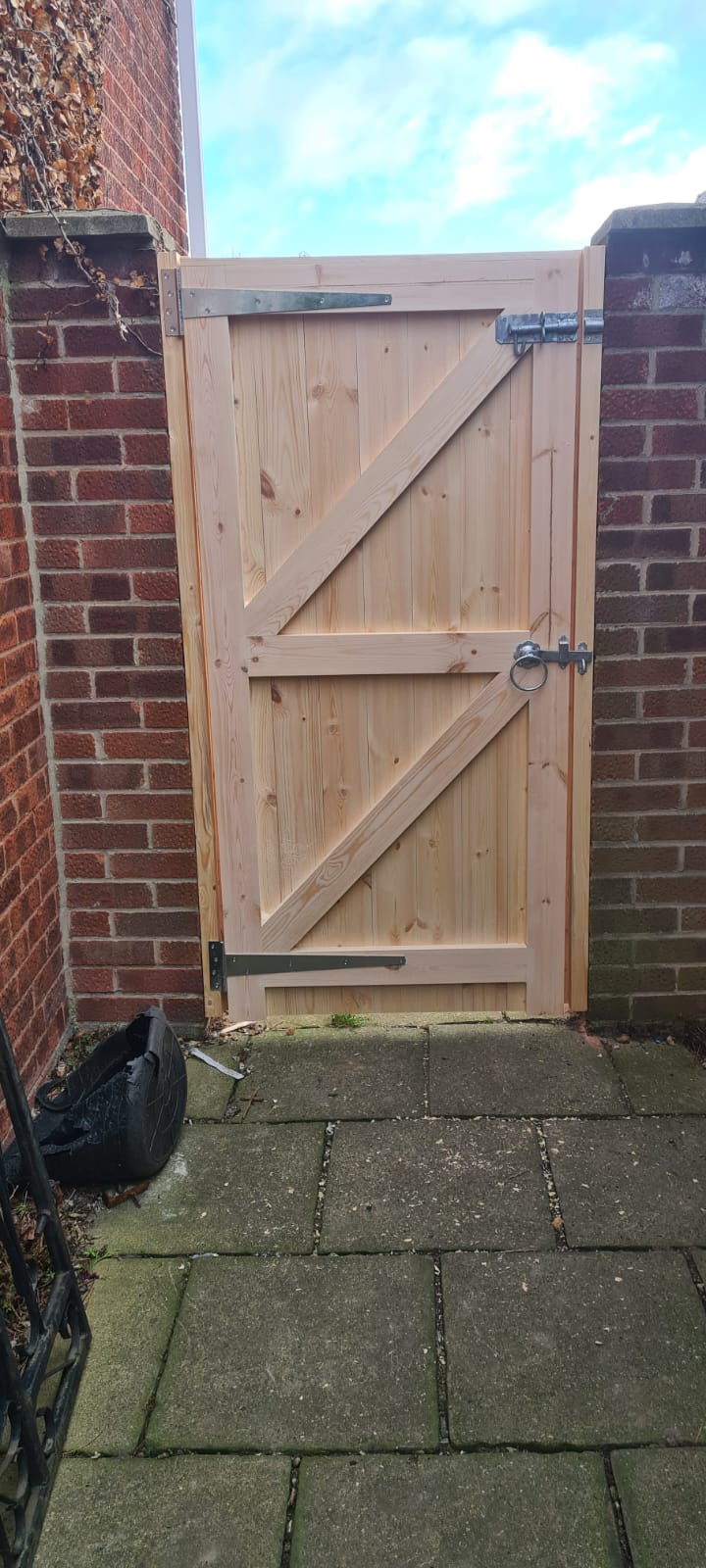
A gateway rarely stays perfectly square for long. Ground settles, old brickwork moves, timber posts lean and driveways slope towards the road. So, can bespoke gates fit uneven openings? Yes, in most cases they can - provided the opening is measured honestly and the gate, posts and fittings are planned as one job rather than bought separately.
A made-to-measure gate gives far more scope than an off-the-shelf size, but it cannot ignore the physical limits of an awkward entrance. The aim is not simply to fill the widest point with timber. It is to create gates that hang correctly, clear the ground, meet neatly and continue to look right after years of use.
Can bespoke gates fit uneven openings without compromise?
They can often fit uneven openings very well, but the best solution depends on where the unevenness lies. A width that varies from top to bottom needs a different approach from a driveway that rises sharply across the entrance. Likewise, a pair of gates between sound masonry pillars is a simpler prospect than gates hung from tired timber posts.
Bespoke manufacture allows the width, height, rail positions and overall design to be tailored to the site. It also allows sensible clearances to be built in. Gates need room to swing, space beneath them for drainage and seasonal movement, and a consistent enough gap at the meeting point to operate the latch securely.
What should not be done is to make one gate excessively out of square merely to copy a badly shaped opening. A gate that is noticeably tapered or twisted can look wrong and may place unnecessary strain on hinges and joinery. In some cases, improving the posts or creating a more regular hanging line gives a stronger and better-looking result than trying to make the timber follow every imperfection.
Start by finding out what is uneven
Before choosing a design, establish whether the issue is width, level, plumb or surface condition. These problems can occur together, particularly on older properties, but they are not solved in the same way.
Measure the clear opening in at least three places: near the top, at the intended latch height and close to ground level. Measure between the actual faces where the gates will sit, not the widest points of decorative caps, uneven render or projecting brickwork. If the opening narrows towards the bottom, that lower measurement usually controls the maximum usable gate width.
Next, check the height on both sides from the proposed hinge point down to the finished ground level. A long straightedge, spirit level and tape measure will quickly show whether the driveway slopes, crowns in the middle or falls away behind the gate line. Photographs taken square-on and from each side are also useful when discussing a bespoke order.
Finally, look at the supports. Brick pillars should be sound, substantial and free from loose mortar around the fixing area. Existing timber posts need to be checked for rot at ground level, movement and twist. A beautiful handmade gate cannot compensate for a post that is already failing.
The opening measurement is not the gate size
This is a common and costly misunderstanding. The clear opening is the available space. The manufactured gate size must allow for hinge clearances, a centre gap on double gates and enough room at the bottom to avoid catching on gravel, paving or a slightly heaved drive.
The exact allowance depends on the hinges, latch arrangement, gate thickness and installation method. It is especially important with close-boarded or solid privacy gates, where a few millimetres of movement can become obvious at the meeting edges. For that reason, measurements should be supplied in millimetres where possible, along with the intended hardware and whether posts are included.
Practical ways to deal with a sloping driveway
A slope is often the main reason homeowners think gates will not work. They will, but the choice of opening style matters.
For a modest fall across the entrance, gates can usually be set with an increased clearance below. This may leave a slightly larger gap on one side, although a well-proportioned design and a sensible ground line often make it far less noticeable than expected. The practical question is whether the gap still provides the privacy, security or pet containment required.
Where the ground rises in the direction the gates open, standard swing gates may catch. Fitting the gates to open inwards rather than outwards can sometimes resolve this, as can adjusting the driveway surface before installation. Outward-opening driveway gates also need careful consideration because they must not swing across a public pavement or highway.
For steeper slopes, rising hinges can lift the gate as it opens. They are a useful option in the right setting, but they need to be specified from the outset. They alter the gate's travel and can affect where the latch, drop bolts and automation equipment sit. A rising hinge is not a cure for every slope, particularly where the gates are very wide, heavy or used frequently.
Another option is to regrade a small section of the drive at the gate line. This can be the cleanest answer where there is enough room to form a level threshold. It is worth comparing the cost of minor groundworks with the compromises involved in an unusually shaped gate or specialised hardware.
When new posts make the better job
If an opening is between uneven walls, adding properly positioned gate posts can create a true and reliable frame for the gates. This is often preferable to chasing uneven brickwork with packers and multiple hinge adjustments.
Posts can be set plumb, at the correct spacing and to a height that suits the design. They also make it easier to position hinges where the timber has adequate strength and where the gate can swing clear of the ground. On broad driveway entrances, substantial posts and correctly selected hinges are essential because the weight and leverage of each leaf are significant.
A post may reduce the clear opening slightly, so this must be allowed for before ordering. However, losing a small amount of width is often worthwhile for gates that close cleanly, latch reliably and do not need constant adjustment. If vehicles need to pass through, measure the required access width first, including mirrors and any regular deliveries.
Build quality matters more on an awkward opening
Uneven sites place more demand on the gate and its fittings. If a gate is fitted with tighter tolerances on one side or operates over an imperfect surface, it needs to hold its shape. This is where construction should be considered alongside appearance.
Mortice and tenon joinery, exterior-grade D4 glue and hardwood dowels provide strength at the points where rails meet stiles. Engineered timber construction also offers greater stability than ordinary pressure-treated softwood, helping to reduce the risk of excessive twisting and movement as the weather changes. No timber product is completely immune to outdoor conditions, but good materials and joinery give the installer a far better starting point.
The hardware must match the gate's size and weight. Long adjustable hinges allow fine setting during installation and offer useful scope for future adjustment. A sturdy latch, drop bolts on a pair of driveway gates and correctly placed stops all help the gates meet in the right position rather than relying on the hinges alone.
At M & D Woodcraft, made-to-order gates are built with these practical details in mind. Sharing accurate dimensions, photographs and a clear description of the ground conditions allows the right conversation to happen before manufacture, when changes are straightforward rather than expensive.
Be clear about the finish you can accept
An uneven opening does not always produce perfectly parallel gaps. The decision is whether any variation will be visually acceptable and functional once the gates are in place. On a rustic garden entrance, a gentle slope beneath a timber gate can look entirely at home. At the front of a formal property with close-boarded driveway gates, a larger triangular gap may be more noticeable and may call for groundwork, posts or a different operating method.
Think about the purpose of the gates as well. A small clearance may be needed to keep a dog contained. A private garden may need minimal sightlines beneath the gate. A driveway gate needs enough clearance for leaves, grit and winter frost without scraping every time it is used. There is no single correct gap because the right detail depends on the setting.
The most useful approach is to treat an uneven opening as a site condition to be designed around, not a reason to settle for a poor fit. Measure carefully, address unstable supports first and choose a gate layout that works with the direction of the slope. A well-made bespoke gate can turn an awkward entrance into a feature that feels properly considered every time you come home.


Comments